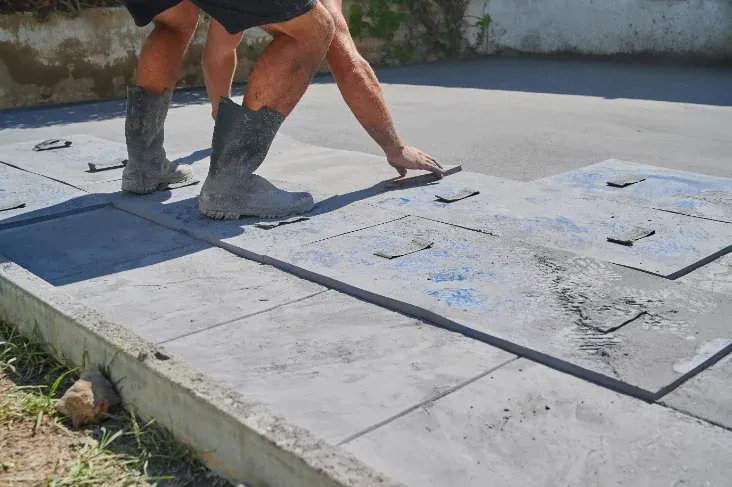
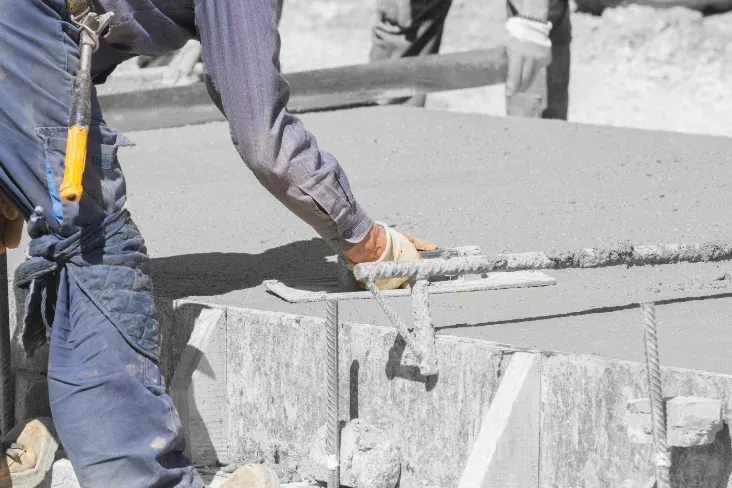
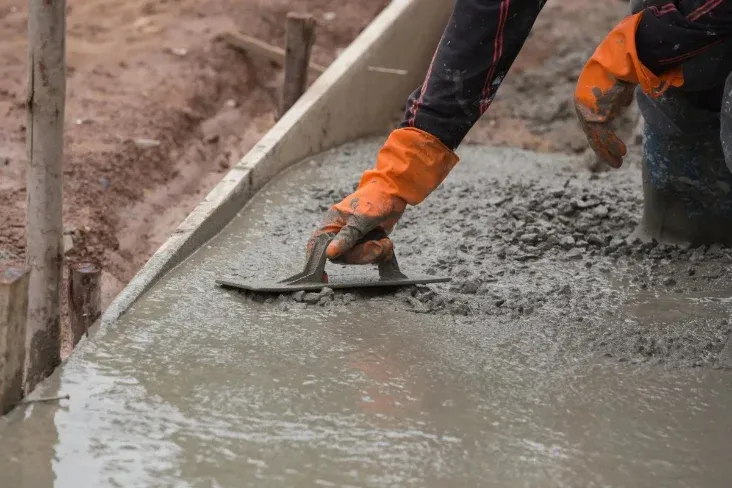
Visalia sits in the San Joaquin Valley, a region shaped by decades of agriculture and by summers that regularly push past 100 degrees, with a recorded high of 115. Heat like that shortens the working window for finishing and stamping concrete, since the surface can begin setting faster than crews can work it. It also means curing schedules matter more here than in cooler climates. Concrete that sets too fast on the surface while the interior is still curing is more likely to crack.
The valley’s soil adds another layer. Clay-heavy soil common across this part of California expands and contracts with moisture, which is why base preparation and, in some cases, grade beams matter more here than they would in sandier soil. A slab poured without accounting for that movement is more likely to crack or settle within a few years, even if the concrete itself was mixed and finished correctly.